Sweden's Oversight Mechanisms and Their Effects on Variety in Digital Slot and Live Play Options
Skriven av Jonas Schmitt · 2026-10-15
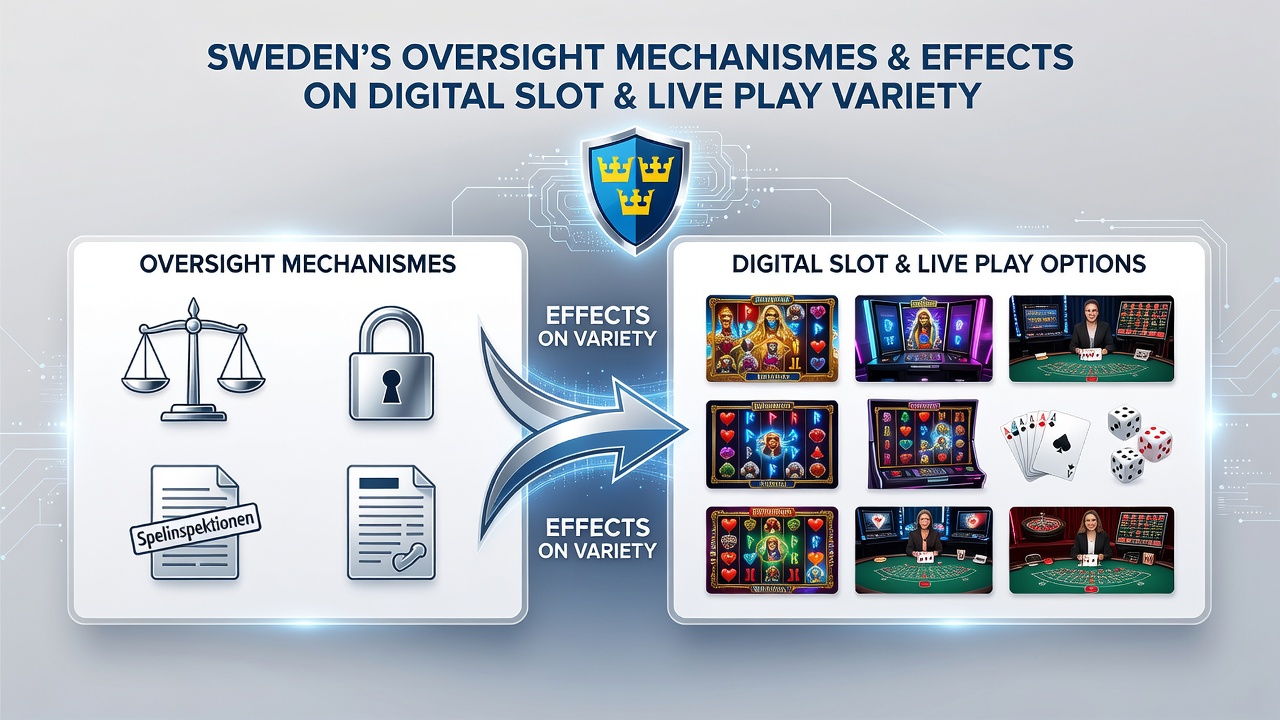
Sweden's Oversight Mechanisms and Their Effects on Variety in Digital Slot and Live Play Options
Sweden maintains a structured regulatory system through Spelinspektionen that governs digital gambling activities including slots and live dealer formats, with licensing processes that determine which operators and game suppliers can participate in the market. The authority requires all providers to obtain certification for each title before it appears on licensed platforms, a step that filters offerings based on technical standards and compliance criteria established under the Gambling Act. Observers note that these procedures create a controlled environment where variety emerges only after multiple layers of review and approval.
Licensing and Certification Processes
Operators seeking entry must demonstrate adherence to financial stability requirements along with responsible gambling protocols that include player tracking systems and self-exclusion databases, while game developers submit their slot mechanics adn live studio configurations for independent testing. Data from regulatory filings indicate that certification timelines often span several months, during which evaluators assess random number generators, return-to-player percentages, and integration with age verification tools. This sequence limits rapid introduction of new content, yet it also produces a catalog of titles that meet uniform technical benchmarks across platforms.
Impact on Digital Slot Offerings
Slot variety in the Swedish market reflects the cumulative effect of these approvals, with providers such as NetEnt and Play'n GO maintaining catalogs that undergo repeated scrutiny for each new release. Studies conducted by industry analysts show that the number of distinct slot themes available to Swedish players has stabilized since the re-regulation in 2019, although individual games incorporate features like progressive jackpots and bonus rounds that comply with spending limit integrations. Researchers at academic institutions have documented how the emphasis on certified RNG fairness reduces certain experimental mechanics that appear in less regulated jurisdictions, leading to a more consistent but narrower selection of gameplay styles.
Effects on Live Play Formats
Live dealer options face additional oversight because real-time video streams and dealer interactions require continuous monitoring for integrity and player protection measures. Platforms must ensure that live blackjack, roulette, and baccarat tables operate through studios that meet location and staffing criteria, which restricts the total number of active tables at any given time. Figures released in October 2026 reveal that licensed Swedish sites collectively offer fewer than 150 simultaneous live tables compared to larger international markets, a difference attributed directly to studio certification volumes and ongoing audit requirements.
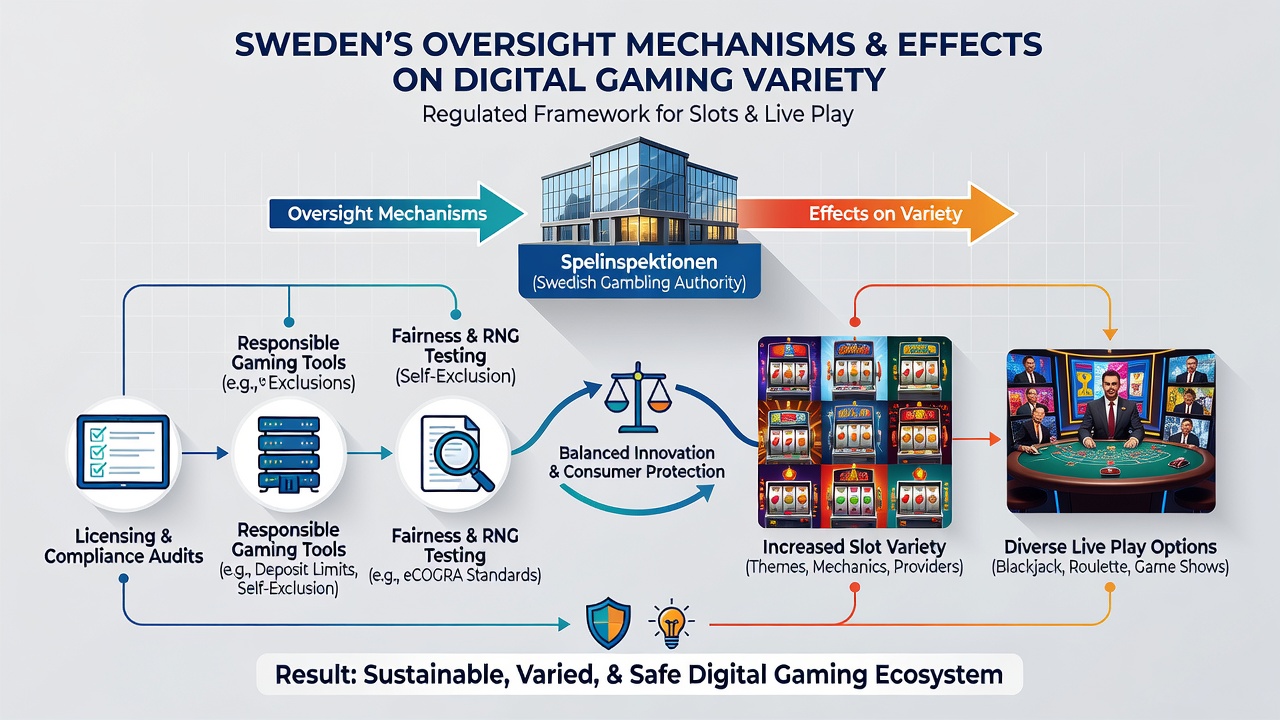
Those who track market data observe that the constraint on live variety stems partly from the mandate that all broadcasts include real-time responsible gambling prompts and session timers visible to participants. This integration adds technical overhead for providers, resulting in slower rollout of niche variants such as speed tables or multi-camera experiences. Trade reports from the European Gaming and Betting Association highlight that operators prioritize high-volume games to justify the certification investment, which concentrates offerings around classic formats rather than expanding into less common live experiences.
Broader Market Data and Comparisons
Market statistics compiled through 2026 demonstrate that Swedish players encounter approximately 2,500 certified slot titles across major sites, a figure that remains lower than in markets with lighter certification loads. Comparisons drawn from regulatory summaries in other regions, including those published by the Nevada Gaming Control Board, show similar patterns where oversight correlates with moderated product diversity. Swedish rules also require that any new live format undergo extended pilot testing before full deployment, extending the period between innovation and availability. Academic papers examining Nordic gambling markets note that this testing phase filters out offerings that fail to align with harm-minimization objectives, thereby shaping the final range of choices presented to users.
Operators adapt by focusing resources on titles that clear approval hurdles efficiently, which concentrates development around proven mechanics while deprioritizing experimental concepts. Data from platform analytics indicate steady player engagement with the approved selection, suggesting that consistency in quality compensates for reduced breadth in certain categories. External analyses from research groups in Australia further illustrate how comparable licensing frameworks produce parallel outcomes in game availability across different jurisdictions.
Conclusion
Sweden's oversight system through Spelinspektionen establishes clear pathways for digital slot and live play content while imposing structured gates that influence the scope of available options. Certification processes, ongoing audits, and integration of player protection features collectively determine which games reach the market and at what pace. Current figures from October 2026 confirm that these mechanisms sustain a defined catalog of offerings rather than an unrestricted expansion, with operators and developers aligning their pipelines to meet the established criteria. The resulting environment delivers verified products under uniform standards, even as the total variety remains shaped by regulatory volume and review timelines.